In a world where we women are constantly balancing responsibilities, expectations, and the pace of modern life, stress can quietly build in the body—often showing up as tiredness, worry, or disrupted sleep. For women in Oxford and beyond, practices like restorative yoga and yoga nidra offer powerful, science-backed ways to support the nervous system, reduce stress, and improve sleep.
Often misunderstood, restorative yoga and yoga nidra are distinct practices. Understanding how these practices can support you at every stage of life can transform your wellbeing at every age and stage of life and create meaningful shifts in how you feel every day. My youngest clients are my kids (10, 12 but they’ve been practising for 5 years), my oldest is a couple in their mid 80s. Whatever your age or stage, you’ll be warmly welcomed to all my classes.
What is restorative yoga?
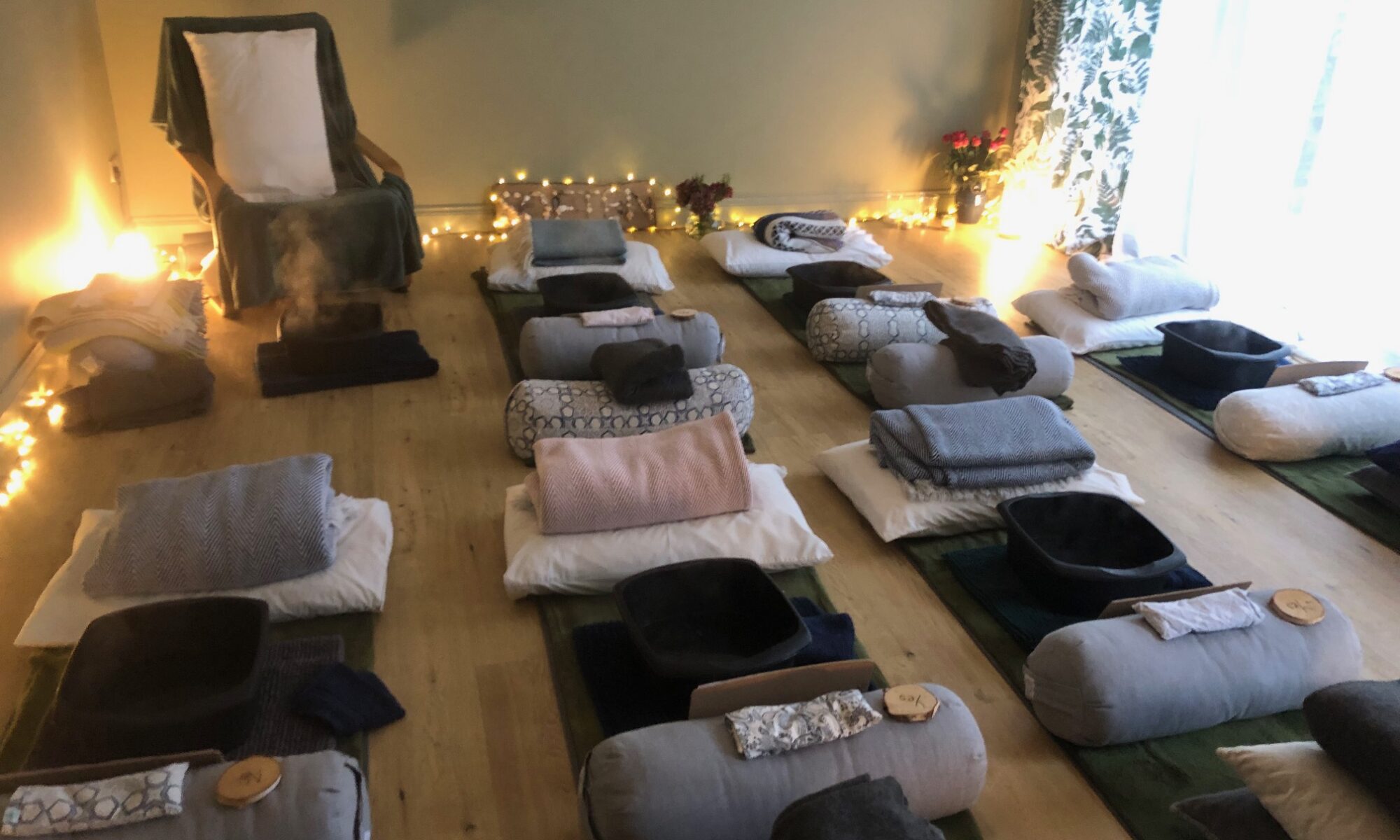
Restorative yoga is a slow, gentle practice that uses beautiful, clean, thoughtful props like pillows, blankets, and bolsters to fully support the body in restful poses. All the props you could possibly need are provided in your class, including your mat.
The intention is simple: to allow the body to relax completely.
In my restorative yoga classes in Oxford, poses are typically held for several minutes, giving your body time to soften, release, and reset. All my classes are sprinkled with poetry, philosophy, science and silence. They are an unhurried space enabling you to relax completely.
What is yoga nidra?
Yoga nidra, often called “yogic sleep,” is a guided meditation practice usually experienced lying down, although I always have comfortable chairs or seated options available if you are pregnant or uncomfortable to lie down. While the body is still, the mind is gently guided into a state between wakefulness and sleep. This is where true nervous system restoration happens.
Yoga nidra is a powerful tool for stress relief and better sleep.
The key differences
While both practices are deeply restorative, they work in slightly different ways:
Restorative yoga
- Focus: physical relaxation of the body
- Method: Supported poses held for time
- Effect: Releases tension and signals safety to the nervous system
Yoga nidra
- Focus: conscious and subconscious relaxation
- Method: guided meditation and breath awareness
- Effect: potential to re-educate the mind to enter deeply restful state without sleeping, this can create more creativity, concentration and flow – AND/OR to improve both getting to and quality of sleep. It depends on the style of class and time of class and your unique experience!
Why these practices matter for women throughout life
Women experience unique physical and emotional demands throughout life—from hormonal fluctuations to caregiving roles, career pressures, and beyond. This makes nervous system support especially important.
In your teens
- Manage stress related to school/college and relationships
- Develop your sense of self and the importance of self-care
- Supporting mental health and sleep
In your 20s–30s
- Manage career stress and busy schedules
- Support hormonal balance
- Improve sleep and energy levels
In your 40s–50s
- Support perimenopause and menopause by reducing frazzle, overwhelm and a safe place to actually rest
- Support deeper, more consistent sleep
- Feel time prioritised for you and all the benefits this brings for you and your community
In later life
- Maintain mobility and gentle movement
- Support emotional wellbeing throughout times of wellness AND illness
- Create a sense of calm and connection with yourself and others
For women in Oxford, restorative yoga and yoga nidra offer accessible, low-impact ways to care for both body and mind—no matter your experience level.
Finally,
If you’ve been feeling overwhelmed, exhausted, or disconnected, this is your invitation to slow down.
Restorative yoga and yoga nidra each offer unique experiences and the opportunity to grow tolerance, capacity, resilience – responding not reacting as your nervous system soothes, stress reduces and sleep improves.
Women of Oxford, there’s never been a better time to prioritise this kind of care for your body and mind. Your rest is not a luxury—it’s essential.
Book classes here.